
⚡ Quick Read
- What happened: The Central Electricity Authority projects India’s peak power demand will reach 459 GW by 2036, while CERC has adopted tariffs for 1,500 MW of NTPC solar projects and 1,670 MW of NHPC solar projects.
- Why it matters: The massive capacity expansion and regulatory tariff adoption provide clear price discovery benchmarks for developers and EPC contractors planning large-scale ISTS-connected solar projects.
- Watch: Future KERC wind tariff finalization and the integration of demand-side management frameworks across state distribution utilities.
Background and Context
The Central Electricity Authority (CEA) has released its National Generation Adequacy Plan for the period 2026-27 to 2035-36, signaling a significant shift in India’s energy landscape. The plan projects that the country’s peak power demand will surge to 459 GW by 2035-36, up from the 289 GW anticipated in 2026-27. This decade-long roadmap is designed to assess the generation mix required to sustain economic growth while ensuring grid stability and reliability.
Key Details
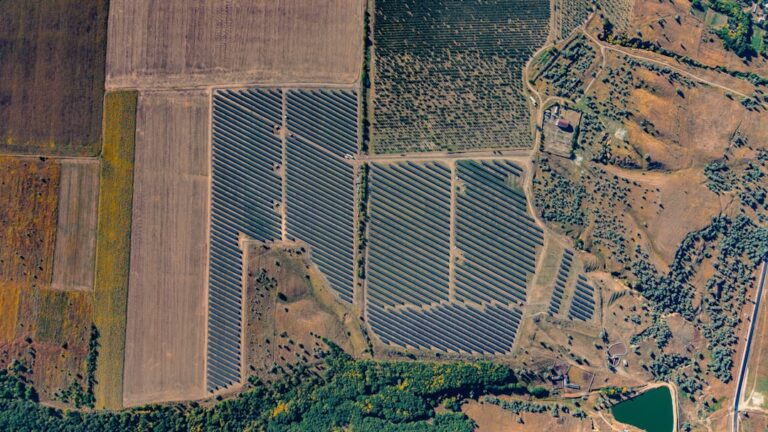
Regulatory activity has been intense, with the Central Electricity Regulatory Commission (CERC) formally adopting tariffs for major solar projects. CERC approved tariffs of ₹2.68/kWh and ₹2.69/kWh for NTPC’s 1,500 MW interstate transmission system (ISTS)-connected solar projects. Additionally, NHPC’s Tranche IX solar projects, totaling 1,670 MW (including a 500 MW greenshoe option), saw tariffs approved between ₹2.43/kWh and ₹2.47/kWh.
At the state level, the Karnataka Electricity Regulatory Commission (KERC) is pushing for modernization, introducing a framework to enhance energy efficiency and demand flexibility. KERC has also proposed a new generic ceiling tariff for wind power projects at ₹3.24/kWh for the FY 2026-27 to FY 2028-29 period, marking a reduction from the current ₹3.34/kWh. Meanwhile, in the battery storage sector, ACME Solar Holdings has commissioned 155 MW/470.25 MWh of storage capacity in Rajasthan, bringing its total operational battery portfolio to 297.67 MW/951.74 MWh.
What This Means for EPCs and Developers
The adoption of these tariffs provides much-needed financial certainty for developers and EPC contractors. With benchmarks established for both NTPC and NHPC projects, stakeholders can better forecast project viability and procurement costs. The push for demand-side management in Karnataka suggests that future EPC contracts may increasingly incorporate smart-grid components and demand-response infrastructure. Furthermore, the growth in battery storage, exemplified by ACME Solar’s latest commissioning, highlights a clear market trend toward hybridizing solar projects with storage to mitigate intermittency.
What Happens Next
As the CEA’s adequacy plan takes effect, the industry should expect a sustained pipeline of large-scale renewable tenders to meet the 459 GW demand target. Developers should monitor the finalization of the KERC wind ceiling tariff, which will set the tone for future wind project economics in the state. Additionally, the procurement of 100 MW of solar with 50 MW/200 MWh of storage by NUGEL in Uttar Pradesh serves as a bellwether for the integration of storage-backed renewable energy in northern India.